The Switch
An online introduction to menstrual cups aiming to address first-time user apprehensions and increase customer confidence. The four-week project is a hypothetical product for Lena, and is not affiliated with the brand.
Context
4 week project for a senior design courseRoles
- Content Strategy
- Project Management
Tools
- Keynote
- G Suite
The Switch is comprised of five steps which answer major questions about menstrual cups, to reduce frictions within the customer journey. Content above the fold is concise to ease visitors in, with further details provided below.
My Contribution
As the project manager, I ensured the various parts of the project were being completed according to our project timeline, and made sure they were cohesive. As the content strategist, I wrote and validated copy in the voice of a 'supportive older sister'. I also developed and promoted a qualitative and quantitative research survey that received over 450 responses, which heavily informed the project's direction.
Problem
Despite physical, environmental, and financial benefits of menstrual cups, lack of exposure in mainstream media and markets has prevented their widespread use. The majority of menstruators already use tampons, pads, and/or liners, and are not convinced to undertake the physical and emotional risk of switching menstrual hygiene products. While the Lena Cup is recognized as the #1 cup for beginners, Lena's existing site does not effectively communicate the product's value and benefits to potential customers.
Solution
The Switch by Lena directly addresses false assumptions, apprehensions, and concerns consumers may have about menstrual cups.
Leveraging the brand's #1 status and encouraging visitor engagement, The Switch acts as a hero element on Lena's landing page to capture newcomers. Lena's existing home page content remains below.
The Switch aims to efficiently and clearly answer potential customers’ questions.
Each step of the onboarding has secondary information associated with it to answer follow-up questions.
Our survey of over 450 respondents suggested that most customers were convinced to try a menstrual cup by a close friend or sibling. To create a meaningful experience, the team decided to strategize content from the perspective of a supportive, older sister. As the content strategist, I ensured that all content followed this principle and had a consistent tone and attitude.
Process
After identifying business problems within the menstrual cup market, we identified frictions with Lena's existing website. Information was scattered across multiple pages, and neglected to highlight the product’s extensive benefits. We then conducted a survey to understand peoples' perception of cups and the factors influencing this perception, in order to design a digital experience that encouraged visitors to try the product.
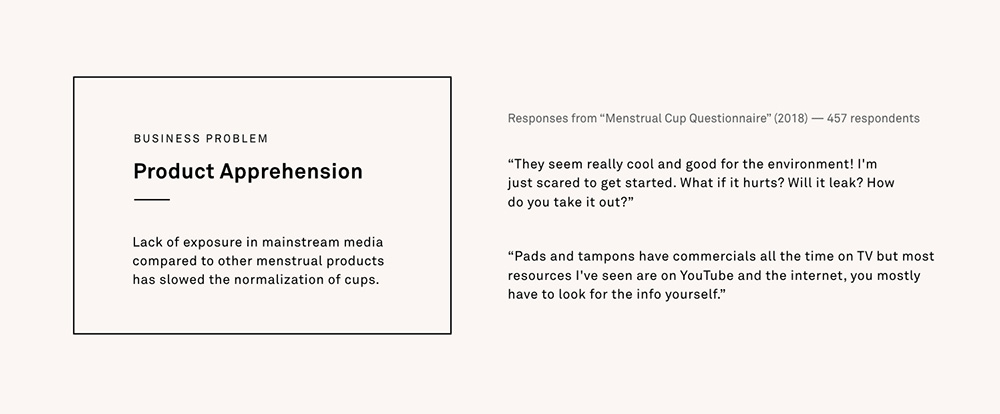
Business Problem A: Product Apprehension.
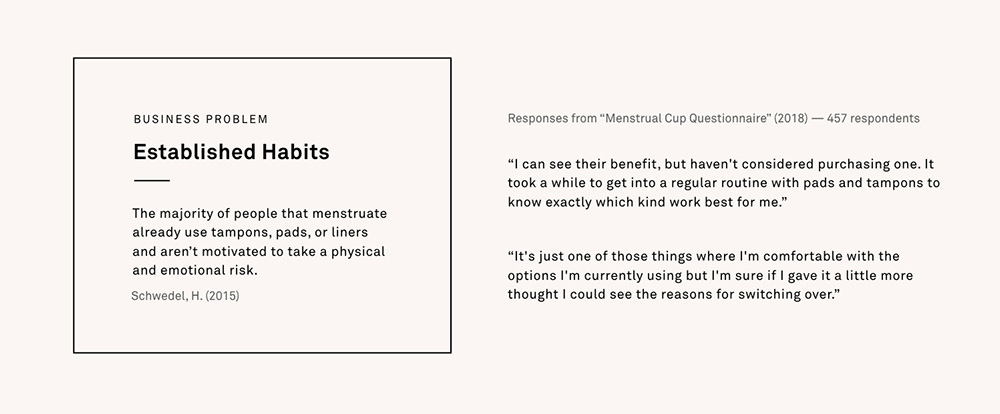
Business Problem B: Established Habits.
After considering the various opportunities for this project as well as its scope and timeframe, we focused on addressing the apprehensions of potential customers.
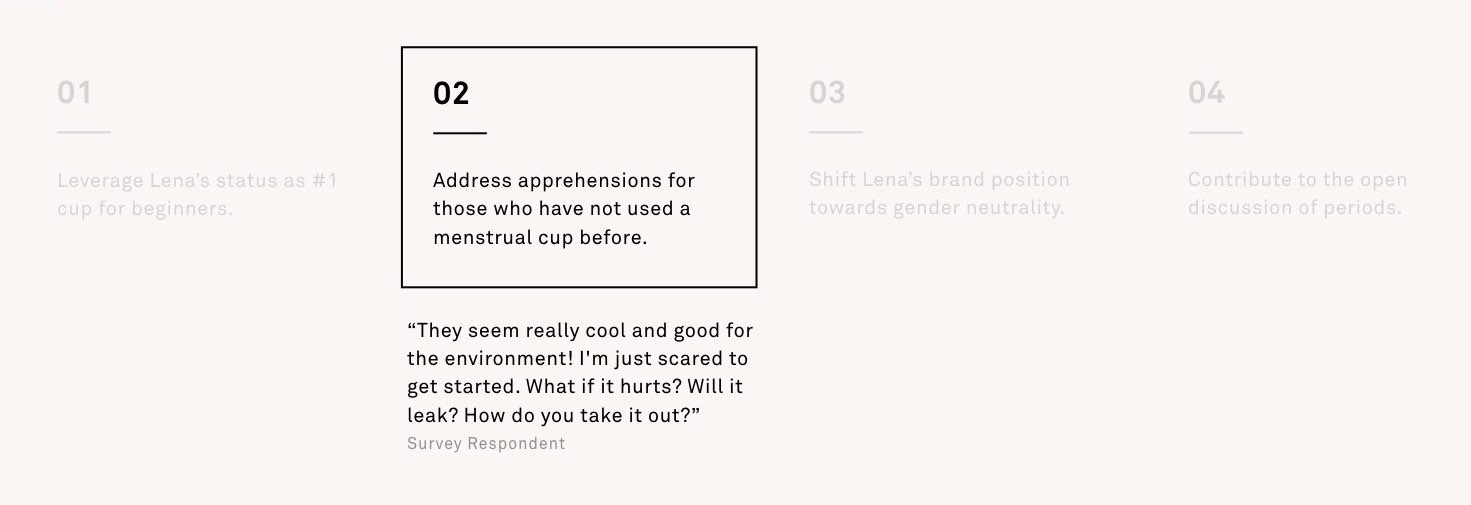
The opportunity: address apprehensions for those who have not used a menstrual cup before.
We then developed personas from common themes in our research: we chose to design for the 'Accustomed & Uncertain' menstruator, who uses other menstrual products and does not know enough about cups to switch over.
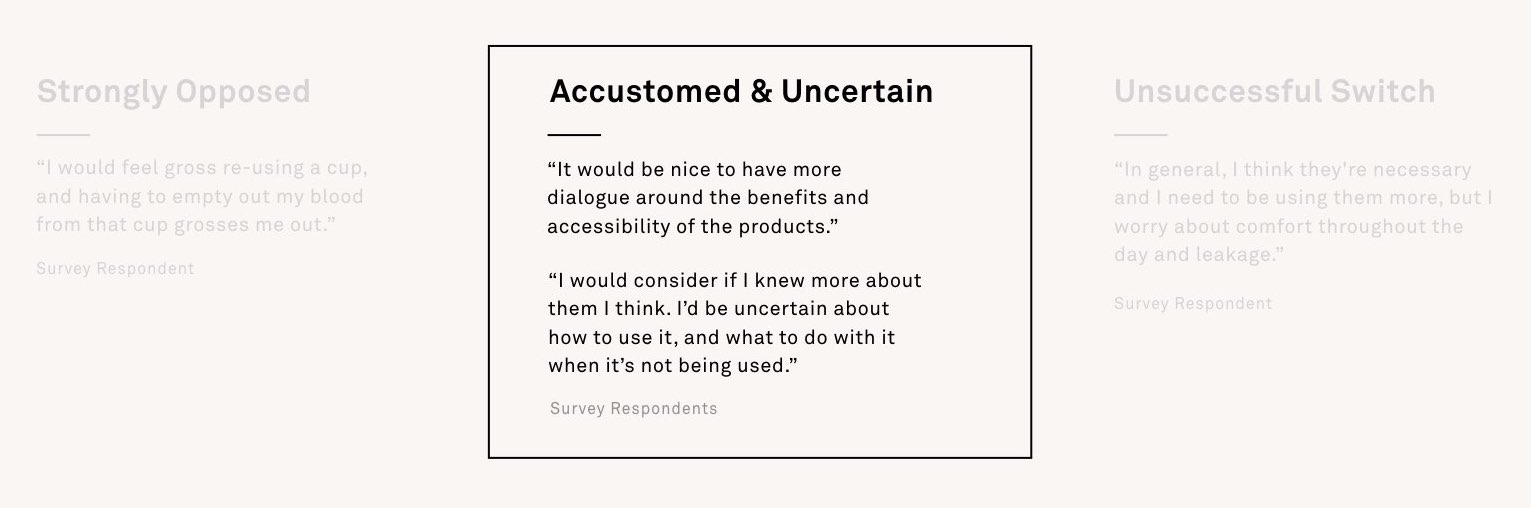
One of the personas derived from our research: accustomed & uncertain.
The nature of the product lends itself to a rocky customer journey. Our research suggests the struggle of switching is recognized by the majority of cup users, but is said to be well worth it. Considering the business problems, we chose to address the pre-purchase stages and aimed to convey the value of menstrual cups more effectively.
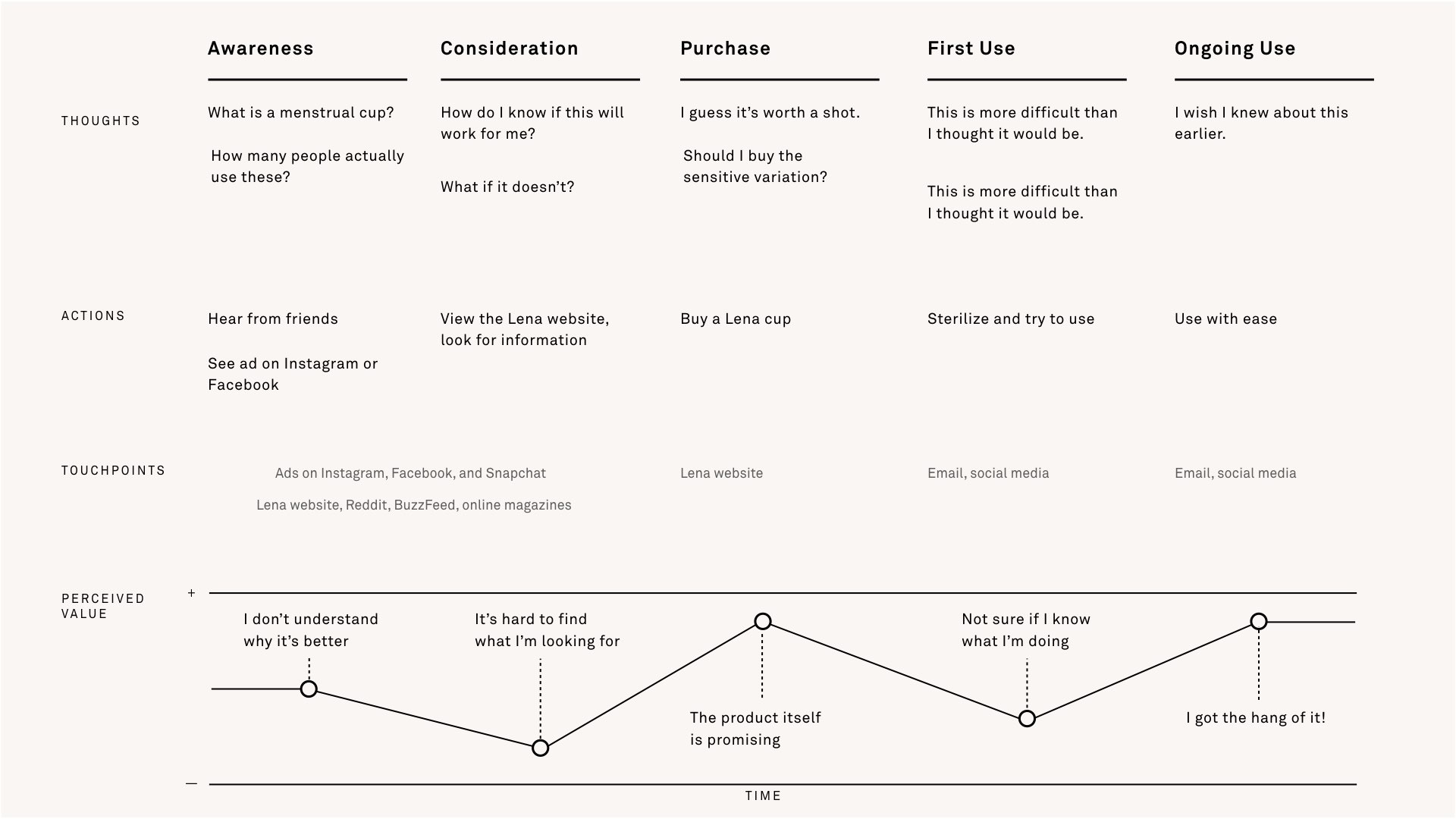
The customer journey map of someone purchasing a Lena Cup.
For the awareness stage, we considered how customers might find out about The Switch.
Because Lena is an online brand, social media is a seamless touchpoint. Instagram ads capture mobile customers, as well as promote Lena's presence.
Facebook ads capture desktop users and promote Lena’s page.
The final step of the onboarding emphasizes Lena's customer satisfaction policy and reminds visitors that they can return their cup for a full refund.
Lena's current site has a stories section, but doesn't feature any content related to personal experiences with cups. We found this was a missed opportunity, seeing as based on the number of reviews and discussion online, cup users love to share their stories. Our research also suggested that if people could see how using a cup would impact their lifestyle, they would feel more comfortable with them.
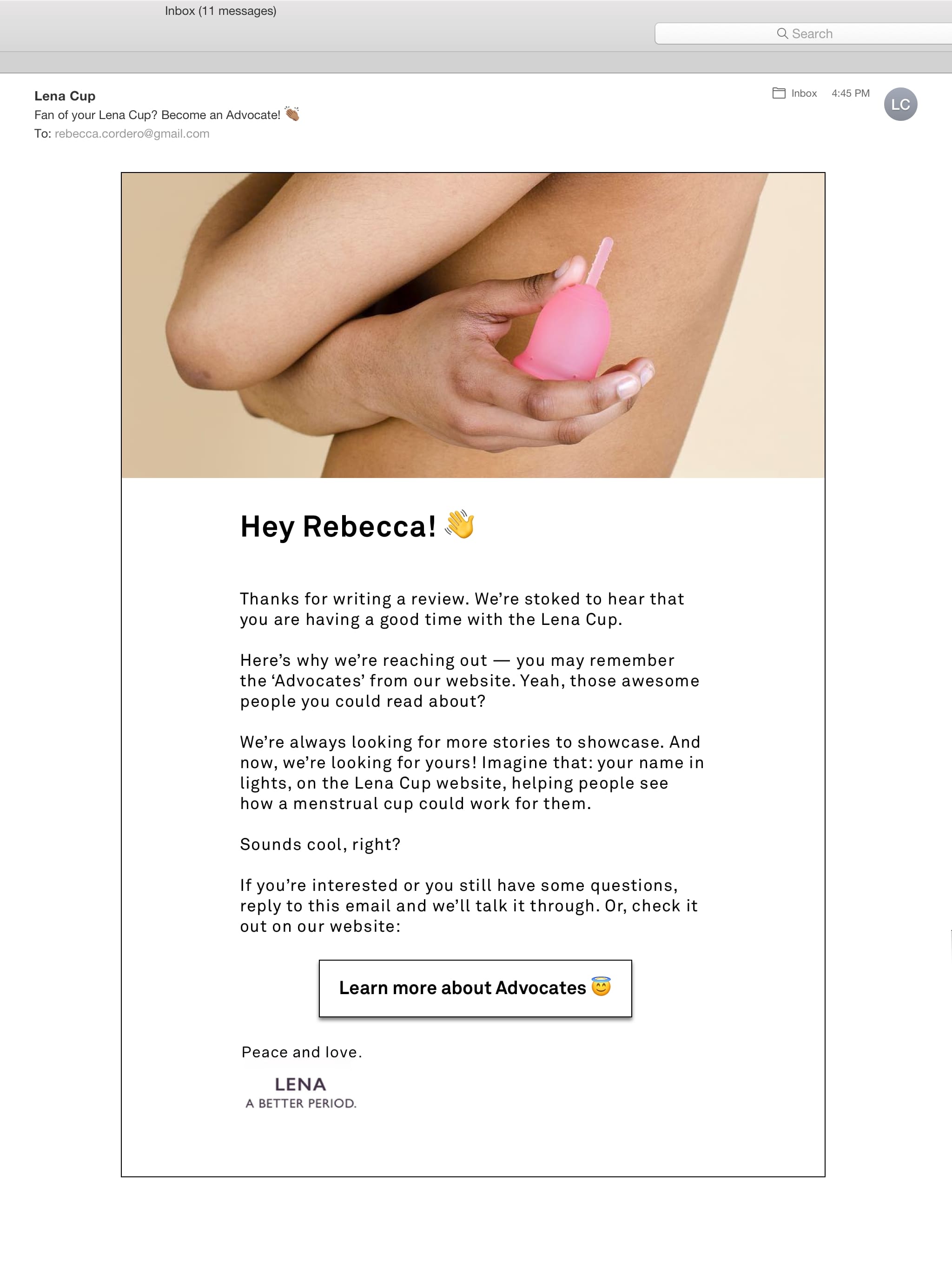
To keep customers engaged with the brand, Lena can reach out to customers to make sure everything is going okay and ask them to share their story.
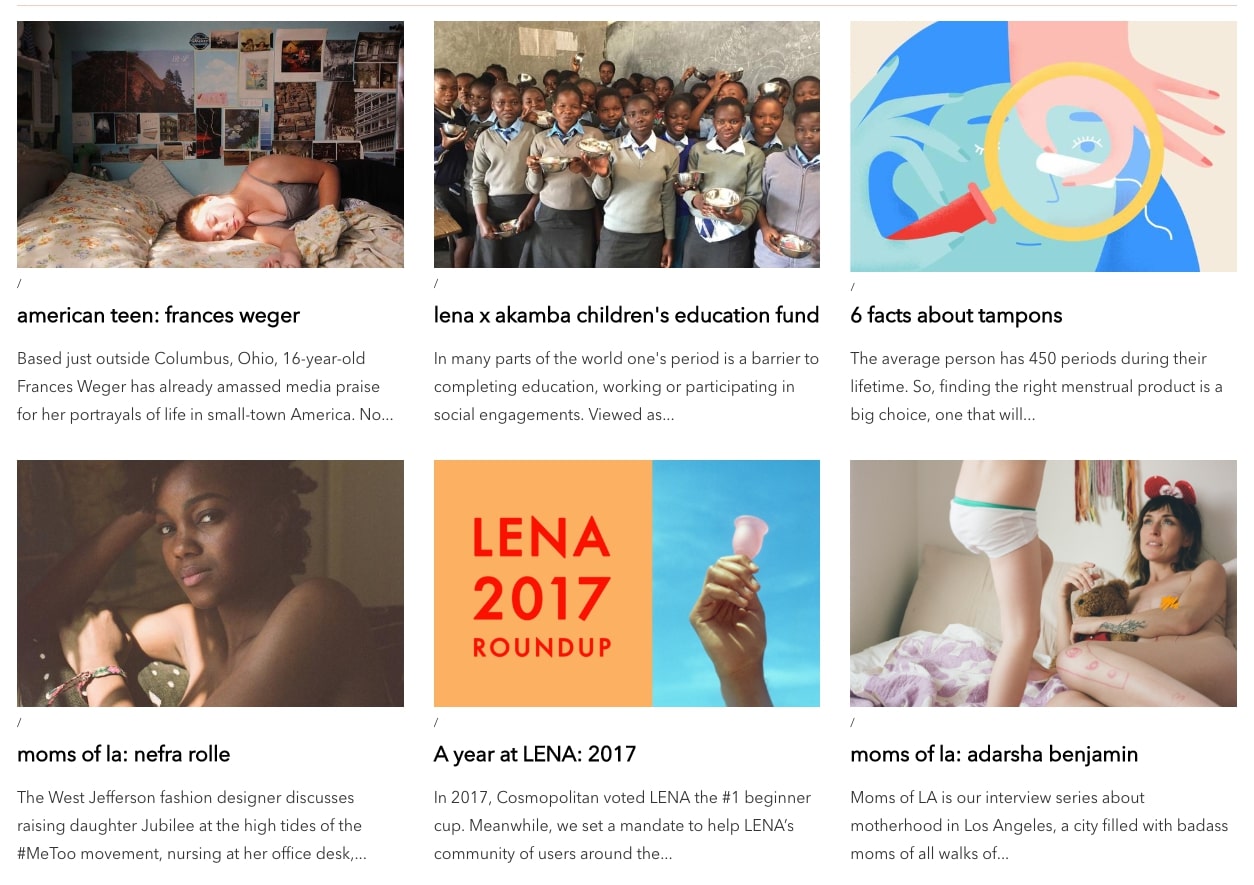
Customers would then work with Lena to have their experience turned into a narrative that could help convince others to try a Lena Cup.
Reflection
Throughout the project, we may have been too ambitious about the issues we were trying to address. Trying to reduce gender dysphoria with a brand that was fairly feminine was difficult, and reducing the stigma around periods could have been an entire project on its own. The team learned a lot trying to address these issues, but deciding on one opportunity earlier in the project would have allowed more time for iteration and validation.